Context
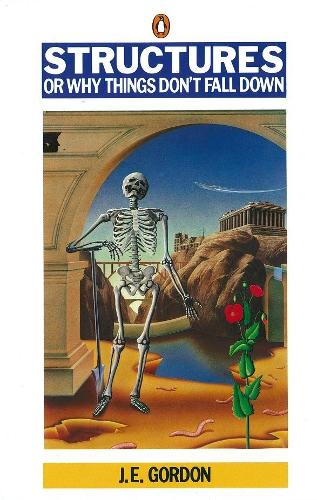
I chose this book to develop intuition for how structures behave and how engineers reason about strength, stiffness, and failure — topics that are often treated too abstractly at school level.
The book is recommended on the Cambridge Engineering reading list, and I am using it to build conceptual understanding rather than memorise formulas.
Key ideas so far
One idea I found particularly compelling is that, for a structure to support a load, it must deform slightly. This answered a question I had often wondered about: how apparently rigid objects can still respond to forces.
The idea that buildings, bridges, or beams compress or deflect under load initially feels counterintuitive, but becomes logical when considered in terms of material behaviour and internal stress.
I have also begun to understand the distinction between stress, strain, and stiffness, and why confusing these concepts can lead to incorrect assumptions about structural performance.
Connections
The study of structures underpins almost all fields of engineering. The ideas here are directly relevant to aircraft structures, spacecraft design, and any system where mass, strength, and safety margins matter.
Questions / things to revisit
I would like to revisit the more mathematical sections later, once I have a stronger background in mechanics and calculus, to better understand the derivations and assumptions behind the equations.